
How many restrooms does a county fair need?
Start with your expected crowd, not your gate count. Fairs run heavier bathroom traffic per hour than a normal event because of food vendors, beer tents, and kids. A good rule from our porta potty needs guide is one unit per 20 to 30 guests during the busiest two-hour window, not the daily average. Gaithersburg fairs often see uneven crowd waves. Friday night might be light. Saturday afternoon can double it. We plan for the peak, then place ADA accessible units at every cluster, since ADA Standards section 213.2 requires at least one accessible unit per grouping, even a small one.
A standard unit holds a 60 to 70 gallon tank and stands about 92 inches tall, so it handles a full fair day without a mid-afternoon pump-out. For bigger fairs, we recommend spreading clusters across the grounds instead of one bank near the entrance. That cuts walk time and keeps lines from backing into vendor rows. If your fair runs a beer garden or wine tent, add extra units there specifically. Alcohol drives bathroom trips up fast, and nobody wants a 15-minute wait between the ferris wheel and the porta johns. Check our porta potty placement guide for ground clearance and stability requirements before you finalize your site map.
What restroom options work best for a fair setting?
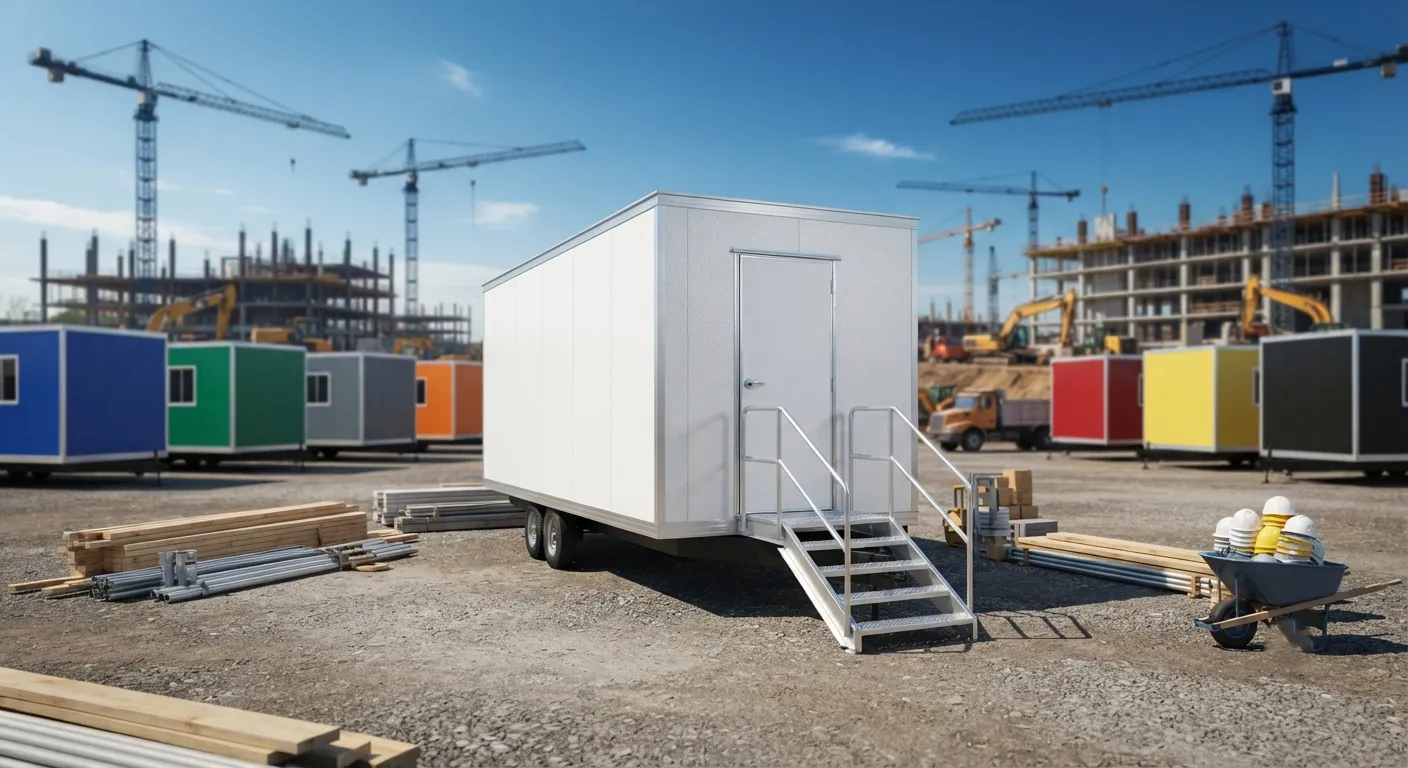
Mix unit types by zone instead of using one option everywhere. Midway and ride areas do fine with standard porta potties, since traffic is quick and casual. VIP areas, sponsor tents, or a beer garden benefit from deluxe flushable units, which feel less like a construction site and more like an actual restroom. For a fair with grandstand seating or a headline concert, a restroom trailer gives guests real stalls, sinks, and mirrors, and a 4 stall restroom trailer handles moderate crowds without the footprint of an 8-stall unit.
Handwashing is its own category. If your fair has a petting zoo, livestock barn, or food demo area, 29 CFR 1910.141(d)(2) requires soap and towels or a hand-drying device at wash stations, not just sanitizer. A portable sink rental near animal exhibits matters more than people expect. We also place hand sanitizer stations at food court entrances as a supplement, never a substitute for real handwashing near animals.
Delivery logistics matter too. Fairgrounds often have gravel lots or uneven grass, and our trucks need roughly 60 feet of straight clearance behind the drop point for roll-off dumpster and restroom trailer placement alike. If your fairgrounds sit on a slope, tell us before delivery day, not after the truck arrives.
Where should restrooms be placed on fairgrounds?
Cluster restrooms at three points minimum: the main entrance, the food court, and any grandstand or stage area. Gaithersburg fair sites vary in layout, but the same rule applies everywhere. Keep units on stable, level ground per ADA Standards section 302.1, and keep the accessible route at least 36 inches wide per ADA Standards section 403.5.1. Fair organizers sometimes forget that golf carts, food trucks, and stroller traffic all compete for the same paths.
Trash and restrooms should not share a footprint. Keep dumpsters and grease bins away from restroom clusters, both for smell and for line-of-sight. If your fair runs multiple days, ask about mid-event servicing. ANSI/PSAI Z4.3 sets a baseline of one service visit per week for lighter use, but a multi-day fair with thousands of daily guests needs servicing scheduled around your specific attendance, not a generic weekly swing. We also recommend temporary fencing around restroom clusters if they sit near parking or livestock areas, just to control foot traffic and keep lines orderly.
For fairs near neighboring communities, note that Montgomery Village sits about 3.9 miles north and Derwood about 4.1 miles southeast, both within easy delivery range if your event overflows into satellite parking. Check service areas for the full coverage map.
| Unit | Day | Week | Weekend |
|---|---|---|---|
| Standard | $100-$350 | $130-$500 | $125-$400 |
| ADA | $200-$400 | $185-$240 | $199-$300 |
| Deluxe | $85-$1200 | $150-$290 | -- |
| Restroom trailer | $175-$2500 | $1397-$1650 | $900-$3000 |
Multi-day fairs often price closer to the event or weekend bands above rather than a single day rate. Get a firm number through our request a quote page once you have a headcount and layout.
How far in advance should I book fair restrooms?
Book as soon as your date and headcount are set, ideally 60 to 90 days out for larger fairs. Restroom trailers and ADA units book fastest. Waiting until two weeks out limits your options to whatever standard units remain in inventory. See emergency porta potty rental if your timeline is already tight.
Do county fairs need ADA accessible restrooms?
Yes. Any cluster of portable toilets must include at least one accessible unit under ADA Standards section 213.2, and that door needs a minimum 32 inch clear opening per ADA Standards section 404.2.3. This applies even to small satellite clusters near secondary stages.
How many handwashing stations does a livestock area need?
There is no fixed fair-specific ratio in our fact set, but 29 CFR 1910.141(d)(2) requires soap and towels at any provided wash station. Place stations at every animal exhibit entrance and food demo area, not just the main restroom cluster.
Can restroom trailers run without a nearby water hookup?
Ask us directly, since setups vary by trailer and site. Fairgrounds without hookups need the delivery team to confirm tank capacity and servicing frequency before your event date. Our restroom trailer rental page outlines stall configurations to help you choose.
What happens if a fair runs long and units need servicing mid-event?
We schedule servicing around your actual attendance curve, not a fixed weekly interval. Multi-day fairs with heavy Saturday traffic often need a servicing pass Saturday night. Flag your busiest day when booking so we can route trucks accordingly.
Next step
Get a delivery date
Tell us the address, the dates and the headcount. We size the order and confirm the route.